
India’s #1 Doctoral Guidance Portal

A doctorate is a long walk. Start with a clear map.

DoctoratePath helps working professionals choose the right PhD, DBA or executive doctorate, apply with confidence and finish while they keep their careers moving.

Free first call. No obligation to enrol anywhere.

Learn From Top Ranked Doctorate Institutes & Universities

🔔 Trend Updates

According to 2024 – NCSES data, Doctoral degree completions have grown for 9 consecutive years (58,131 awarded in 2024), and holders now earn a median $2,307/week – the highest of any education level with unemployment at just 1.8%.

Trending now 📈

Answer two questions. Find the right doctorate path.

This is a starting point, not a verdict. An adviser will help you explore doctorate degree options based on your background and career goals.

What is your background?
What do you want the doctorate to do for you?

Three Types of Doctorate Degrees and How They Differ

Explore the differences between PhD, Online DBA and executive doctorate programmes. Durations are typical for part-time study and vary by university. Always confirm current requirements with the university.

01

PhD

Best for

Careers in teaching, academic research and policy, or professionals who want to develop new knowledge and theory.

Typical part-time length

4 to 6 years. Research-led and typically assessed through an original doctoral thesis.

02

Online DBA Doctorate

Best for

Experienced managers, executives and business owners who want to apply research to real-world business and organisational problems.

Typical part-time length

3 to 4 years. Applied research, often combined with structured coursework and a doctoral research project.

03

Executive Doctorate

Best for

Senior professionals and leaders who need a doctoral study format designed to fit around demanding careers.

Typical part-time length

Around 3 to 4 years, depending on the university. Many programmes use cohort-based learning alongside doctoral research.

Top Universities Offering Online DBA Doctoral Degree

Rushford Business School

Rushford Business School, Switzerland
Doctor of Business Administration
Globally Recognized Degree
🎓 Doctorate | Online
📅 36 Months | Earn a “Dr.” Title

Golden Gate University

Golden Gate University, San Francisco
Doctor of Business Administration
For Leaders, By Leader
🎓 Doctorate | Online
📅 36 Months | Earn a “Dr.” Title

EDGEWOOD+College

Edgewood College, Madison, Wisconsin
Doctor of Business Administration
100% Flexible Learning
🎓 Doctorate | Online
📅 36 Months | Earn a “Dr.” Title

ESGCI

Ecole de Commerce International (ESGCI), Paris
Doctor of Business Administration
ACBSP and IACBE Member
🎓 Doctorate | Online
📅 36 Months | Earn a “Dr.” Title

DoctoratePath- SSBM Logo

Swiss School of Business and Management (SSBM), Geneva
Doctor of Business Administration
For Leaders, By Leader
🎓 Doctorate | Online
📅 36 Months | Earn a “Dr.” Title

SP jain logo

SP Jain Global, Mumbai  | Dubai | Singapore | Sydney
Doctor of Business Administration
Degree Accredited By TEQSA
🎓 Doctorate | Online
📅 36 Months | Earn a “Dr.” Title

High-Impact DBA Specializations for Tech Leaders

With business doctorates up 315% in two decades and doctorate holders earning $2,307/week on average, see which specialization aligns with your next strategic career leap.

Online DBA In Generative and agentic AI

Master autonomous AI architectures before traditional executives catch up.
Explore Specialization →

Online DBA In Machine Learning

Bridge enterprise strategy with scalable algorithmic decision-making.
Explore Specialization →

Online DBA In Data Science

Turn massive multi-source datasets into predictable competitive advantage
Explore Specialization →

Online DBA In Digital Leadership

Lead large-scale digital transformations across global enterprise teams.
Explore Specialization →

Online DBA In Computer Science

Deepen technical authority and drive core platform innovation.
Explore Specialization →

Online DBA In Emerging Technology

Spot disruption trends early and capture new market frontiers.
Explore Specialization →

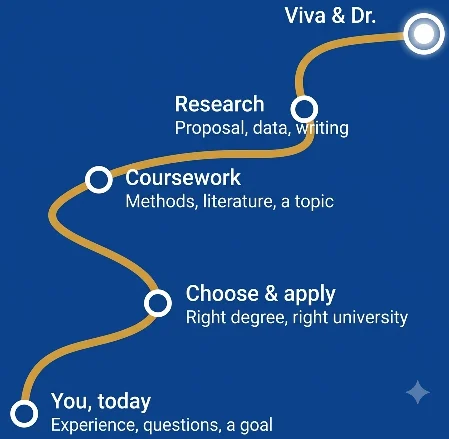
Where Doctoratepath helps, step by step

Almost everyone gets stuck in the same few spots. You're not the exception - and neither are we. We're there for each one, all the way through.

  1. 1

    Choose

    Match your goals and profile to the right degree and the right kind of university.

  2. 2

    Apply

    Prepare your research statement, CV and references. Check eligibility before you pay any fee.

  3. 3

    Coursework

    Plan your time around work. Settle on a topic you can finish.

  4. 4

    Research

    Write a proposal that gets approved. Keep data collection and writing on schedule.

  5. 5

    Viva

    Prepare your defence with mock questions and a clear final submission checklist.

Worldwide Faculty Credentials

What Scholars Around the World Say about the Doctoral Path

Insights from scholars pursuing PhDs and DBAs around the world

I was struggling to bring my research ideas together into a clear proposal. The guidance helped me understand what I needed to focus on and gave me a much clearer direction for my research.
What Scholars Around the World Say about the Doctoral Path
Daniel M.
Thesis Stage → Research Proposal Development
The session helped me understand my methodology much better. The examples made the concepts easier to understand, and I now feel more confident about explaining my research approach.
What Scholars Around the World Say about the Doctoral Path
Aisha K.
Thesis Stage → Research Methodology
I had several questions about my data collection process, and the discussion helped me look at the process from a different perspective. Very useful and practical session.
Ethan O.
Thesis Stage → Data Collection & Analysis
I had been confused about choosing the right methodology for my research. The explanations and examples helped me understand the connection between my research questions and methodology.
What Scholars Around the World Say about the Doctoral Path
Bela S.
Thesis Stage → Thesis Writing
I came into the session with many ideas but was unsure how to structure them. The discussion helped me connect my research problem, objectives and questions much more clearly.
Gabriel.
Thesis Stage → Research Proposal Development
The session gave me a better understanding of how to approach my literature review. I learned how to move beyond simply collecting papers and start developing a stronger academic argument.
Kylie L.
Thesis Stage → Literature Review
Writing my thesis had become overwhelming, especially when organizing my literature review. The guidance helped me break the work into manageable steps and regain my focus.
Henry N.
Thesis Stage → Research Methodology
This was a very informative session. I received useful ideas about conducting my research and learned several things that I can immediately apply to my own thesis.
Fatima R.
Thesis Stage → Research Execution
Doctoral research can sometimes feel like a lonely journey. Hearing other researchers discuss similar challenges was reassuring and helped me look at my own research problems differently.
James T.
Thesis Stage → Thesis Development

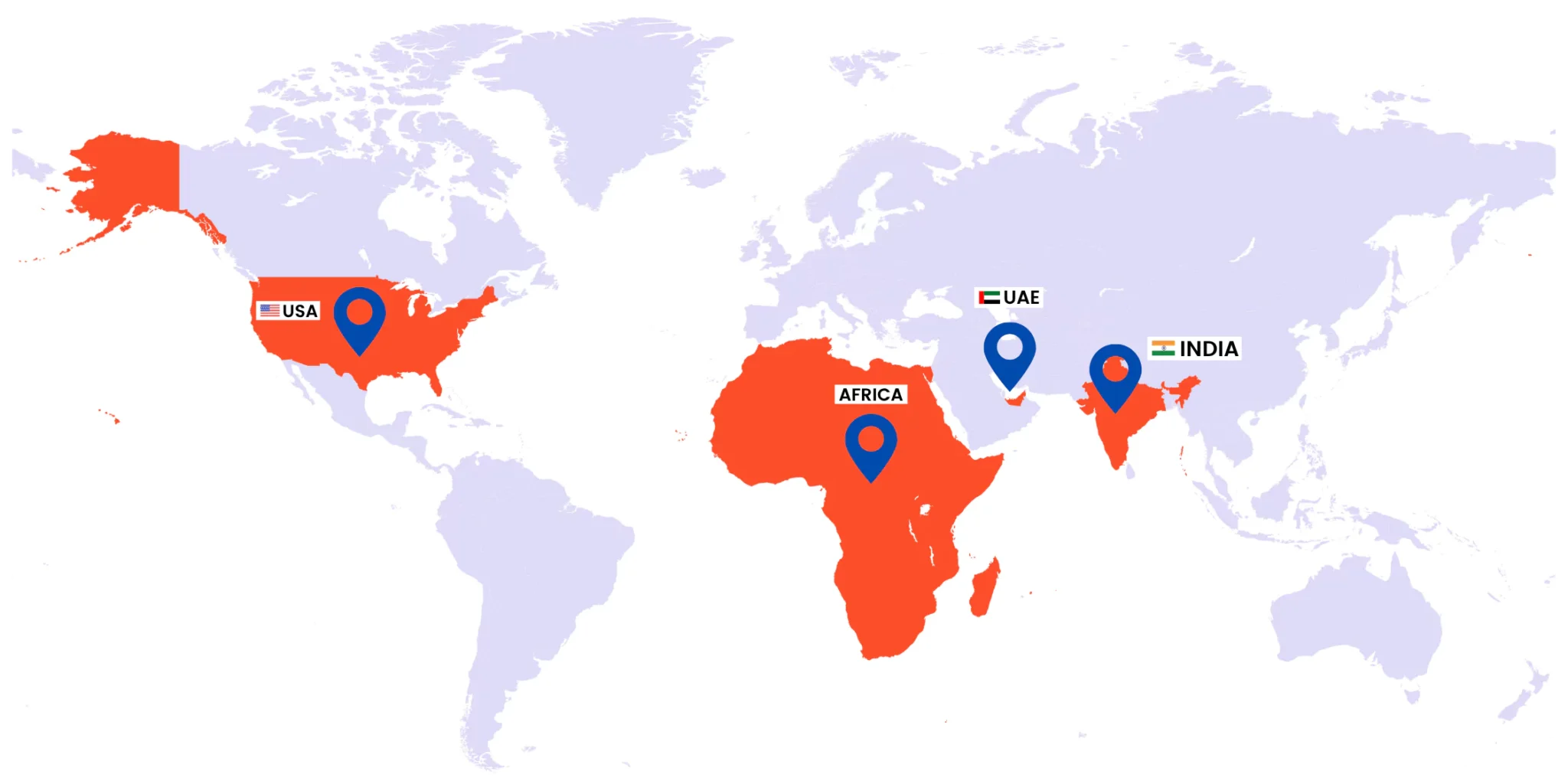
Empowerment Across Continents, Growth Without Boundaries

At DoctoratePath, we connect ambitious business leaders with top-tier international institutions to foster a borderless network of academic excellence. Our mission is to simplify your doctoral journey—delivering globally recognized, WES-verified online doctoral degree pathways designed for working executives who want to solve real-world industry challenges without interrupting their careers.

Questions People Ask First

Can I do a doctorate while working full time?

Yes. Many part-time and executive doctorate programmes are designed for working professionals. Expect to set aside regular weekly hours for several years, so plan the schedule before you commit.

Most PhD programmes typically require a master’s degree, while DBA (Doctor of Business Administration) programmes generally require a master’s degree along with relevant professional work experience. Some DBA programmes may also consider candidates with a bachelor’s degree and a minimum of 5+ years of relevant industry experience. Eligibility requirements can vary by university, so we recommend checking the exact admission criteria for each programme you are considering.

No. Recognition depends on the university and the rules that apply to it. We help you verify a programme’s status before you apply, especially if you plan to teach.

Fees vary widely between universities and countries. On the free call we share a realistic range for the options that fit you, and you decide from there.

No one can. The university decides admission, and you do the research. We help you make a stronger application and stay on track.

Doctoral degree for working professional designed so that you can study while continuing your job. It usually comes in three forms:
  • Part-time PhD: research degree at a university, IIT, NIT or BITS with limited campus time.
  • Executive PhD / Executive Fellow Programme: built for experienced managers, mostly at IIMs and top business schools.
  • Professional doctorate (DBA, EdD and similar): applied research on workplace problems, mostly offered by foreign universities.

It depends on the type of doctoral programme and the purpose for which the qualification will be used. A part-time PhD from a UGC-recognised university, IIT, IIM, or BITS Pilani generally follows applicable Indian regulations and recognition requirements. A DBA or online doctorate awarded by a foreign university may have different recognition requirements, particularly for teaching positions or government jobs in India, and acceptance can vary by employer or regulatory body. In the corporate sector and private institutions, acceptance may also vary depending on the employer and the role.

Always verify the university’s recognition and accreditation status, as well as the applicable UGC/AIU requirements, before paying any fees or enrolling in a programme.

Yes, in many part-time and executive doctoral programmes, you can continue working while pursuing your doctorate. Depending on the university, you may need an employer’s NOC, permission to attend campus visits for coursework, reviews, or the viva, and a fixed weekly research schedule. Some organisations may also provide study leave.

If you choose an online DBA (Doctor of Business Administration), the programme is designed to be completed online (100%), allowing working professionals to continue their careers without regular campus attendance. 

It is worth it when it matches your goal:

  • Want to teach or do research: a recognised PhD is a strong asset.
  • Want senior leadership or consulting credibility: an executive doctorate or DBA can help.
  • Want only a salary hike: the return is uncertain, so think twice, as it needs 4 to 6 years of steady effort.
  • IIT: best if your work is in engineering, science or technology.
  • IIM: best if you are a manager or leader and want an executive doctorate in management.
  • BITS Pilani: popular for engineers, IT and technology professionals who want a structured working-professionals route.

Your research topic and the supervisor’s availability matter more than the brand.

  • IIT: best if your work is in engineering, science or technology.
  • IIM: best if you are a manager or leader and want an executive doctorate in management.
  • BITS Pilani: popular for engineers, IT and technology professionals who want a structured working-professionals route.

Your research topic and the supervisor’s availability matter more than the brand.

  • Marksheets and degree certificates (10th to Master’s)
  • Updated CV
  • Research proposal or statement of purpose (1 to 2 pages)
  • Employer NOC and experience letters
  • Valid entrance score (if asked), such as NET, GATE, CAT or GMAT
  • Photo ID and category certificate, if applicable
  • Read your company’s HR policy on higher studies.
  • Explain how your research will help the company.
  • Share the programme schedule and expected campus visits.
  • Offer a plan to protect your regular work.
  • Request the NOC and any study-leave or fee support in writing.

A recognised PhD is an important requirement for academic jobs, but the exact rules depend on the latest UGC regulations and the job advertisement. 

Yes, and it is often the smartest choice. A topic linked to your work saves time, gives you data and makes your employer more supportive. Your supervisor must confirm that it is original and academically strong.

  • IT and engineering: IIT/IIIT/BITS part-time or sponsored PhD.
  • Management: IIM executive doctoral DBA programmes, XLRI, MDI, SPJIMR, GGU.
  • Education: PhD in Education at universities or IASE.
  • Healthcare and science: university or research-institute PhD with employer support.
  • Joining a programme without verifying its UGC, AIU, ACBSP, or other relevant accreditation and recognition.
  • Believing claims such as “guaranteed admission” or “PhD in one year.”
  • Choosing a supervisor who is rarely available or provides limited research guidance.
  • Underestimating the time and effort required for research, writing, and completing the thesis.
  • Paying someone else to write your thesis or research work.
What are the stages of a PhD journey in India?
  • Pick your research area.
  • Clear an entrance route (UGC NET/JRF, CSIR NET, GATE, or the university’s own test plus interview).
  • Take admission and finish coursework (usually one semester).
  • Find a supervisor and submit your research proposal.
  • Do the research, with regular progress reviews.
  • Publish papers.
  • Submit the thesis after a plagiarism check.
  • Give your viva (final defence).

The whole journey usually takes 3 to 6 years.

Under UGC rules you need a Master’s degree with at least 55% marks (5% relaxation for SC/ST/OBC-NCL/PwBD). A four-year UG degree with 75% can also qualify. Some institutes add their own conditions.

  • Costs much less than a foreign PhD.
  • Many fellowships give a monthly stipend.
  • Recognised for Assistant Professor jobs and government research posts.
  • Access to Indian labs and facilities.
  • You can research local problems in agriculture, health, policy and language.

Check these six things:

  • Is the university UGC-recognised?
  • Does the faculty work on your topic?
  • Do they publish regularly?
  • Is funding or a stipend available?
  • What do current and past scholars say about the supervisor?
  • Are labs, libraries and journal access good enough?
  • UGC NET/JRF: most subjects
  • CSIR-UGC NET: science subjects
  • GATE: engineering and science
  • ICMR-JRF and DBT-JRF: life sciences
  • JNU, DU, BHU entrance tests: university-specific
  • IITs, IISc, IIMs: own written tests and interviews. IIMs also accept GMAT, GRE or CAT.

IISc Bangalore, IIT Bombay, IIT Delhi, IIT Madras, IIT Kanpur, IIT Kharagpur, IIIT Hyderabad, IIIT Delhi and ISI Kolkata are consistently strong. Also check the latest NIRF ranking.

IIMs, ISB, XLRI, SPJIMR, MDI Gurgaon and IIFT run doctoral or fellow programmes. Some IIMs have executive versions that connect research with real corporate problems.

No. Under the UGC PhD Regulations 2022, a PhD cannot be done fully online or through distance mode. You can study part-time, but you must be enrolled at a proper institution.

Warning: Anything advertising a “UGC-approved 100% online PhD” should make you very cautious.

There is no fully online PhD that Indian regulators recognise. Online doctorates, mostly DBAs, are offered by foreign universities, but their acceptance for teaching jobs or government service is not guaranteed.

For engineering, business and education, the safer path is a recognised part-time, executive or blended programme. Some have short campus or weekend components, but they are not fully online

  • Verify that the degree-awarding university is officially recognised or accredited in its home country.
  • Check the university and programme details on the official website of the relevant higher-education authority in that country.
  • For use in India, check the applicable UGC and AIU requirements for recognition or equivalence, particularly if you plan to use the degree for academic or government employment.
  • Confirm that the university, not just a third-party education provider, is the institution actually awarding the doctoral degree.
  • Check the programme’s delivery mode, admission requirements, duration, assessment process, and thesis requirements.
  • Be cautious of claims such as “guaranteed admission,” “PhD in one year,” or “guaranteed job.”
  • Do not rely solely on reviews or testimonials published on the provider’s own website. Look for independent and verifiable information before enrolling.

Most recognised programmes need you on campus for coursework, reviews and presentations. Some are scheduled around working hours, but a few residential visits are normal. Ask each institute for the exact schedule.

The cheapest/affordable route is usually a part-time PhD at a government university or IIT/NIT, where fees are modest compared with private options. 

You should compare on four points:
  • Accreditation: AACSB, EQUIS or AMBA for foreign universities.
  • Recognition in India.
  • Research and dissertation requirement.
  • Total cost, including travel.
Ask alumni where they actually use the degree.

Education doctorates (EdD) are common abroad. In India, the recognised route is a PhD in Education at a university or IASE. If you plan a school or university career, check recognition first.

No single national portal exists. Each institution has its own (IISc, IIT and IIIT sites). NTA handles UGC NET. Keep watching the admission notification pages of your target institutes.

A part-time PhD generally takes 4 to 6+ years. UGC time limits are about 3 to 6 years, with some extra time for women and PwBD candidates. Professional doctorates like an online DBA usually take 3 to 5 years.

It depends on the employer. Private companies may value the skills, but government and academic employers usually insist on UGC-recognised degrees.

If the degree is recognised, it can bring credibility, senior or research roles and consulting work. If not, the benefit is mostly personal learning. Check the job requirements before enrolling.

Many professionals have completed part-time PhDs while working in IT, defence, teaching, PSUs and healthcare. For real examples, use LinkedIn alumni, university alumni pages and conference talks.

Many online reviews are promotional. Read independent forums such as Reddit and Quora, and speak to at least two alumni. Ask about supervisor access, publication support and recognition.

Yes. Many IITs, IIMs, BITS Pilani and universities have part-time or working-professional options. You will usually need an NOC (No Objection Certificate) from your employer.

  • BITS Pilani: dedicated working-professionals PhD.
  • IITs: Bombay, Delhi, Madras, Kanpur and Kharagpur have part-time or sponsored routes.
  • IIMs: executive fellow/doctoral programmes.
  • Selected NITs and universities: part-time or external category.

Several IIMs run executive fellow or doctoral programmes designed for experienced managers. They usually involve modules, some campus visits and a research thesis. Check the IIM websites for the current list, as names and rules change.

IITs allow sponsored, external or part-time candidates from industry, R&D organisations and PSUs. You usually need an employer letter, a supervisor at the IIT and sometimes a co-guide at your workplace.

BITS Pilani has a dedicated programme where research is done partly at your workplace and guided by BITS faculty. Check the official site for eligibility, intakes and fees.

Central universities, state universities, IITs, NITs and BITS allow it. Look for the “part-time” or “external” category in the admission notice. For management, look at IIM executive programmes plus part-time PhD at XLRI, MDI and SPJIMR.

Compare duration (usually 4 to 5 years), residential modules, eligibility (typically Master’s plus 5+ years’ experience), fees and supervisor availability. Check the executive doctoral pages of IIMs in Bangalore, Ahmedabad, Kozhikode, Lucknow, Calcutta and others, plus MDI, XLRI and universities in Delhi, Mumbai and Pune.

Executive programmes are built for working managers: weekend modules or short campus stays, and research problems often linked to your industry. A regular PhD is full-time, more lab or campus-based and usually funded by a stipend.

Neither is “better”. They serve different goals.

  • PhD: builds new theory and is the standard for academic jobs and research careers in India.
  • DBA: applies research to business problems. It suits leadership or consulting, if the university is recognised.
  • You keep your salary.
  • You apply research to real work problems.
  • The schedule is more flexible.
  • You meet peers from industry.
  • You can move into R&D, consulting or teaching later.

A Master’s degree with minimum marks, 2 to 5 years of experience, an employer NOC, a research proposal and a test or interview.

  • Shortlist institutes.
  • Contact potential supervisors.
  • Get your employer NOC.
  • Prepare your CV, a 1 to 2 page research idea and work-experience proof.
  • Apply within the admission window.
  • Clear the test or interview.
  • Complete fees and registration.
  • Fix a weekly research routine (even 8 to 10 hours).
  • Tell your family and manager your plan.
  • Break the thesis into small milestones.
  • Use leave for campus visits.
  • Choose a topic linked to your job.
  • Use reference and task apps.
  • Never skip supervisor meetings.

Some PSUs and large companies give study leave, fee support or salary continuation. Examples include DRDO, ISRO, BHEL and several IT and manufacturing firms. Check your HR policy for study leave, service bonds and reimbursement rules.

Start with your official supervisor. For extra guidance try LinkedIn, ResearchGate, academic mentorship programmes and university alumni networks. Avoid paying anyone who promises to “do” the research for you.

This is the Prime Minister’s Research Fellowship (PMRF). It pays ₹70,000 per month in the first two years, rising in later years, plus a research grant. It is for high-performing students entering a PhD at IITs, IISc, IISERs, NITs and some other top institutions, through direct entry (good CGPA) or lateral entry (strong record while already in a PhD). Check the PMRF portal for the latest rules and deadlines.

  • UGC JRF, CSIR JRF, ICMR JRF, DBT JRF
  • DST-INSPIRE and SERB fellowships
  • ICSSR fellowships (social sciences)
  • PMRF
  • State-level schemes
  • Institute assistantships and project-based JRF/SRF
JRF is generally around ₹37,000 per month, rising after two years.

Examples include the TCS Research Scholar Programme, Google PhD Fellowship, Microsoft Research India programmes, Qualcomm Innovation Fellowship, and Tata Trusts and other foundation grants. Availability changes yearly.

Most fellowships need full-time enrolment, and full-time government fellowships usually don’t apply if you are employed. So part-time students mainly rely on employer sponsorship, institute-level concessions, education loans, and small conference or research-expense grants.

SBI, Bank of Baroda, PNB, Canara Bank and other public banks, plus private lenders such as HDFC Credila and Avanse. The Vidya Lakshmi portal lets you apply to several banks at once.

For UGC NET, CSIR NET and GATE, learners commonly use Physics Wallah, Unacademy, Testbook, Adda247 and local institutes. Try free demo classes and previous-year papers before paying.

GRE is mainly needed for foreign programmes. Popular options include ETS official material, Magoosh, Manhattan Prep, Kaplan, Princeton Review and Indian centres such as Jamboree. Start with ETS’s free practice tests.

Some education consultants do, but quality varies, and I can’t verify reviews. Start free: talk to your Master’s professors, current PhD scholars and university career cells.

Be careful. Nobody can guarantee admission. Genuine help includes proposal feedback, CV review and interview practice. Never pay large amounts upfront.

Get feedback from professors and senior scholars first. If you pay for help, use it for editing and structure, not for someone to write the proposal for you.

Ethical support means language editing, formatting, referencing and statistics guidance.

Warning: Ghostwriting is academic misconduct. UGC plagiarism rules are strict, and a ghostwritten thesis can cost you your degree.

Read faculty pages and Google Scholar profiles, shortlist people whose recent papers match your interest, and send a short, polite email with your CV and a one-page idea. Also use LinkedIn, ResearchGate and conference contacts.

  • Find the admission notice on the institute’s website.
  • Register and create your profile.
  • Upload marksheets, CV and research statement.
  • Pay the application fee.
  • Track the entrance test or interview dates.
  • Accept the offer and complete joining formalities.

Tell us where you are. We'll suggest your next step.

Share a few details and an adviser will call you to book a free 30-minute session.